CPV Community Update — 2027
Our latest community newsletter covering upcoming events, volunteer highlights, and neighborhood news.
Resources & Reading
Community newsletters, research, and documents from Coosaw Point Volunteers.
Our latest community newsletter covering upcoming events, volunteer highlights, and neighborhood news.
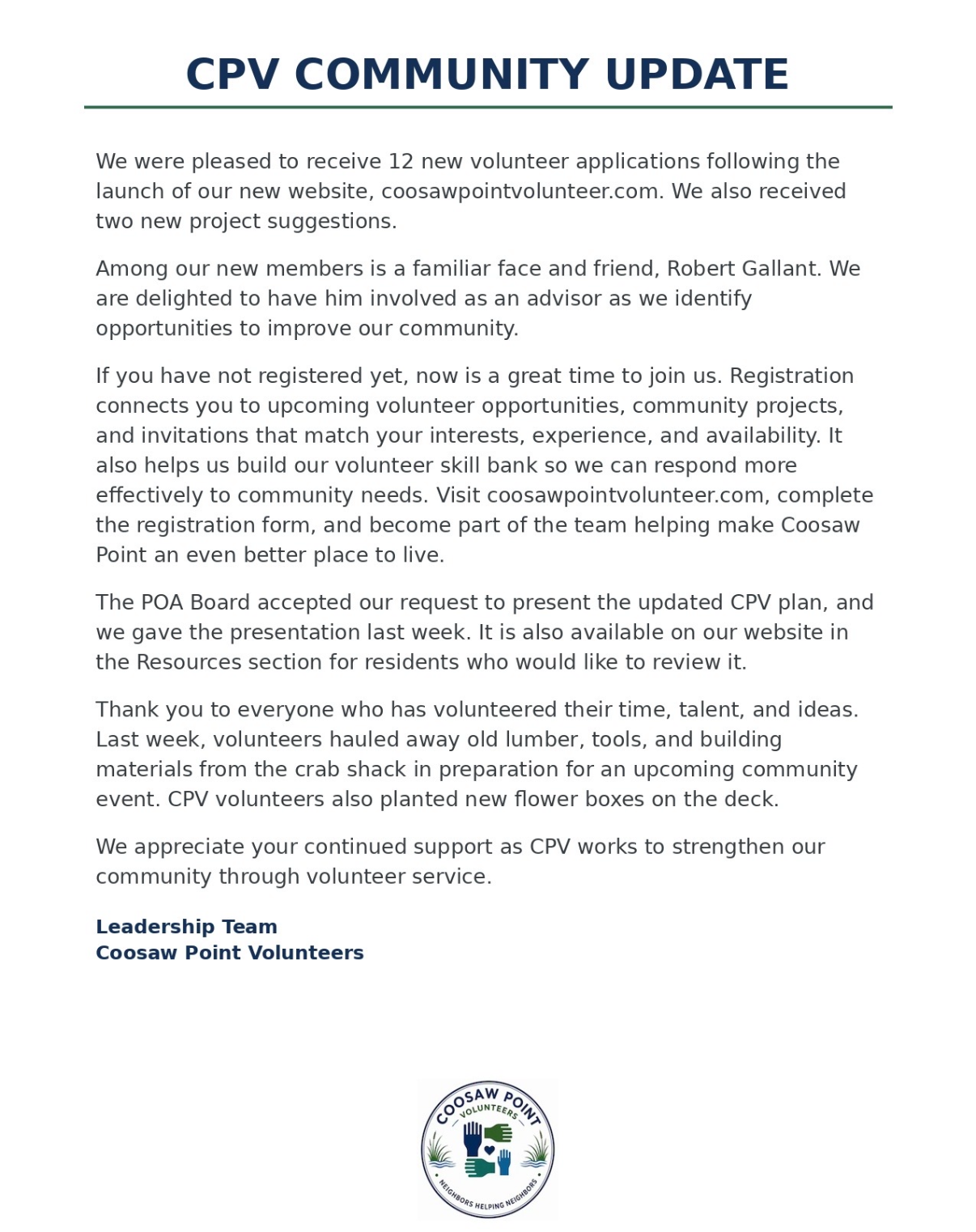
Latest community update from Coosaw Point Volunteers.
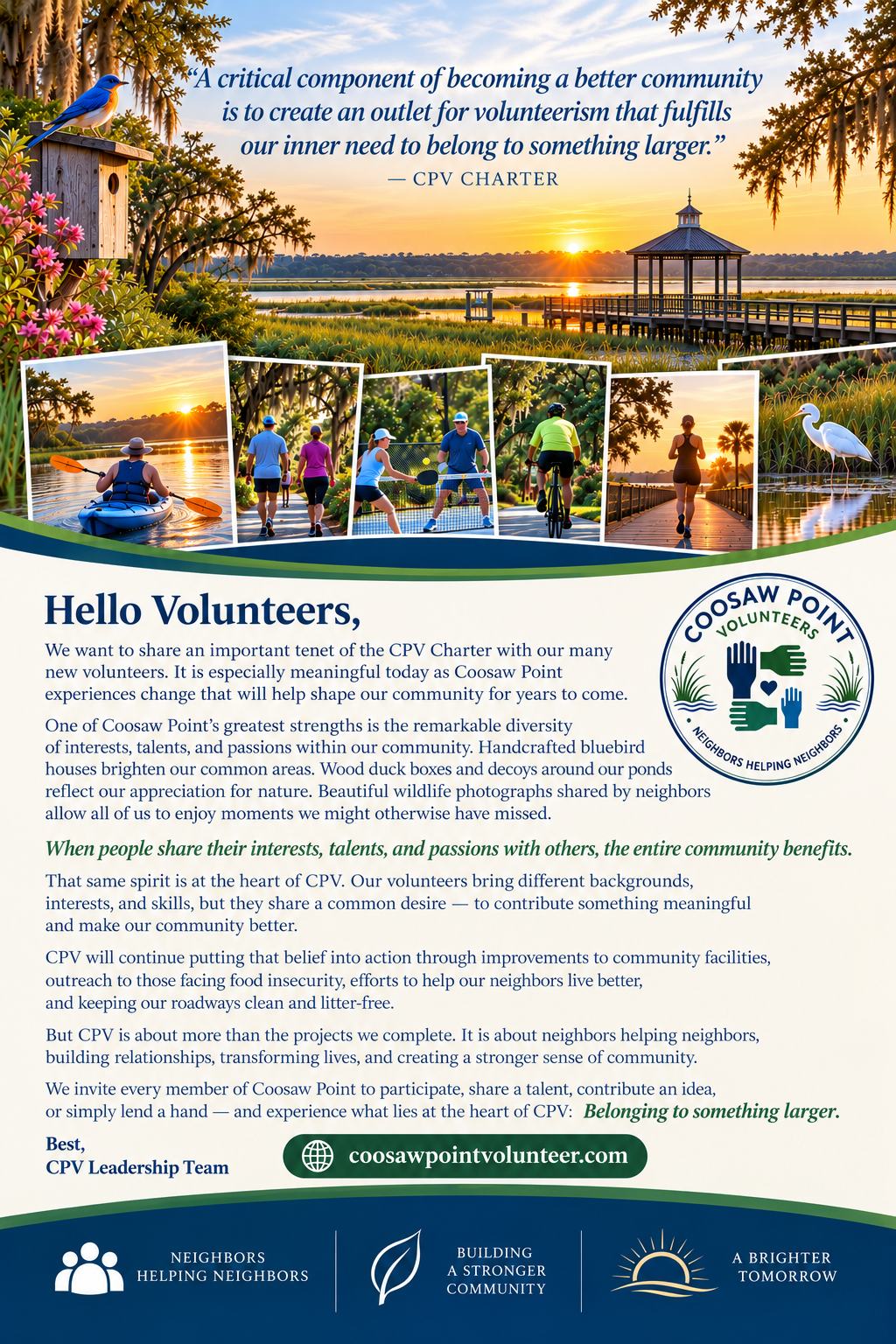
A message from the CPV Leadership Team on the spirit of volunteerism and belonging at Coosaw Point.
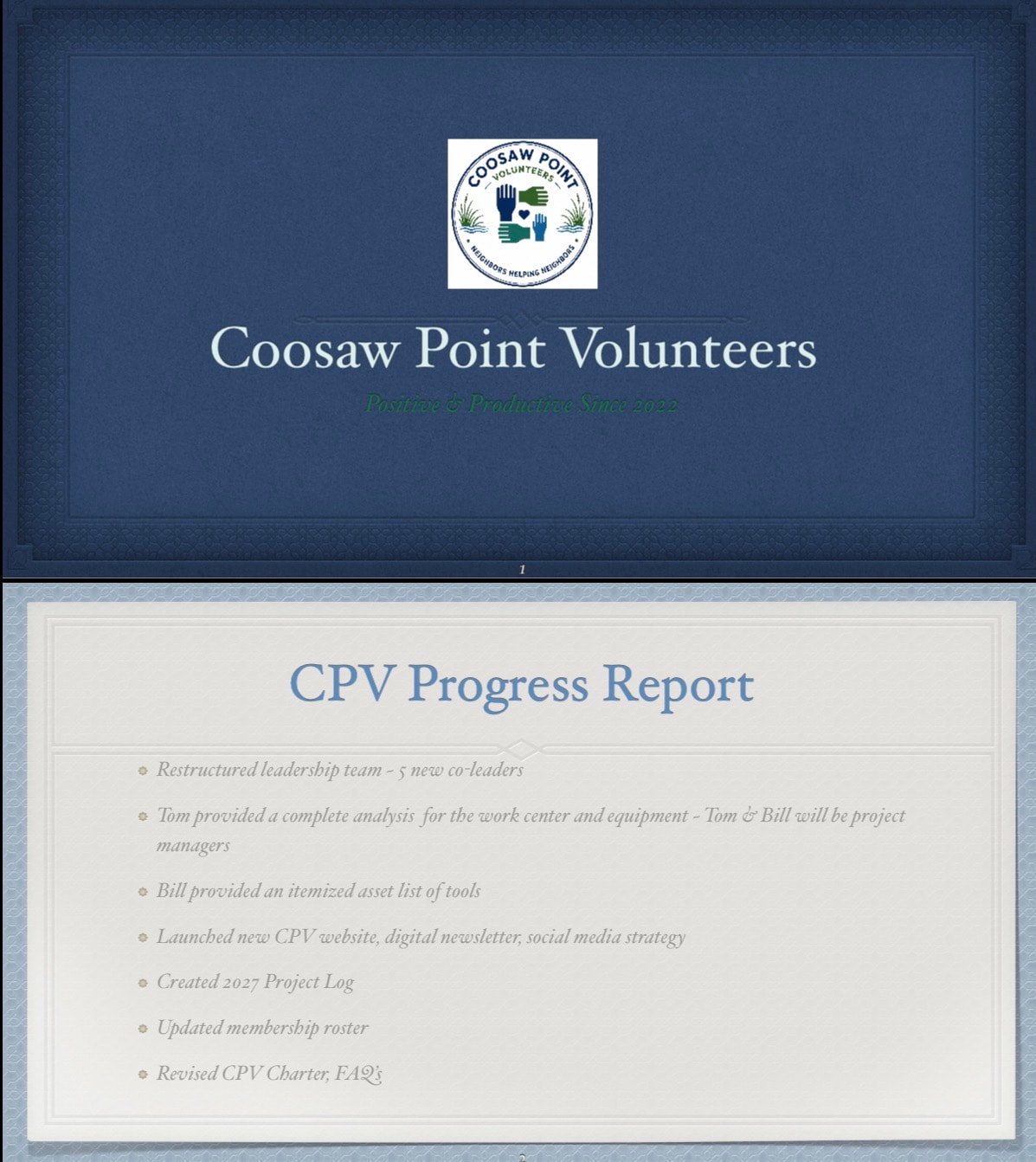
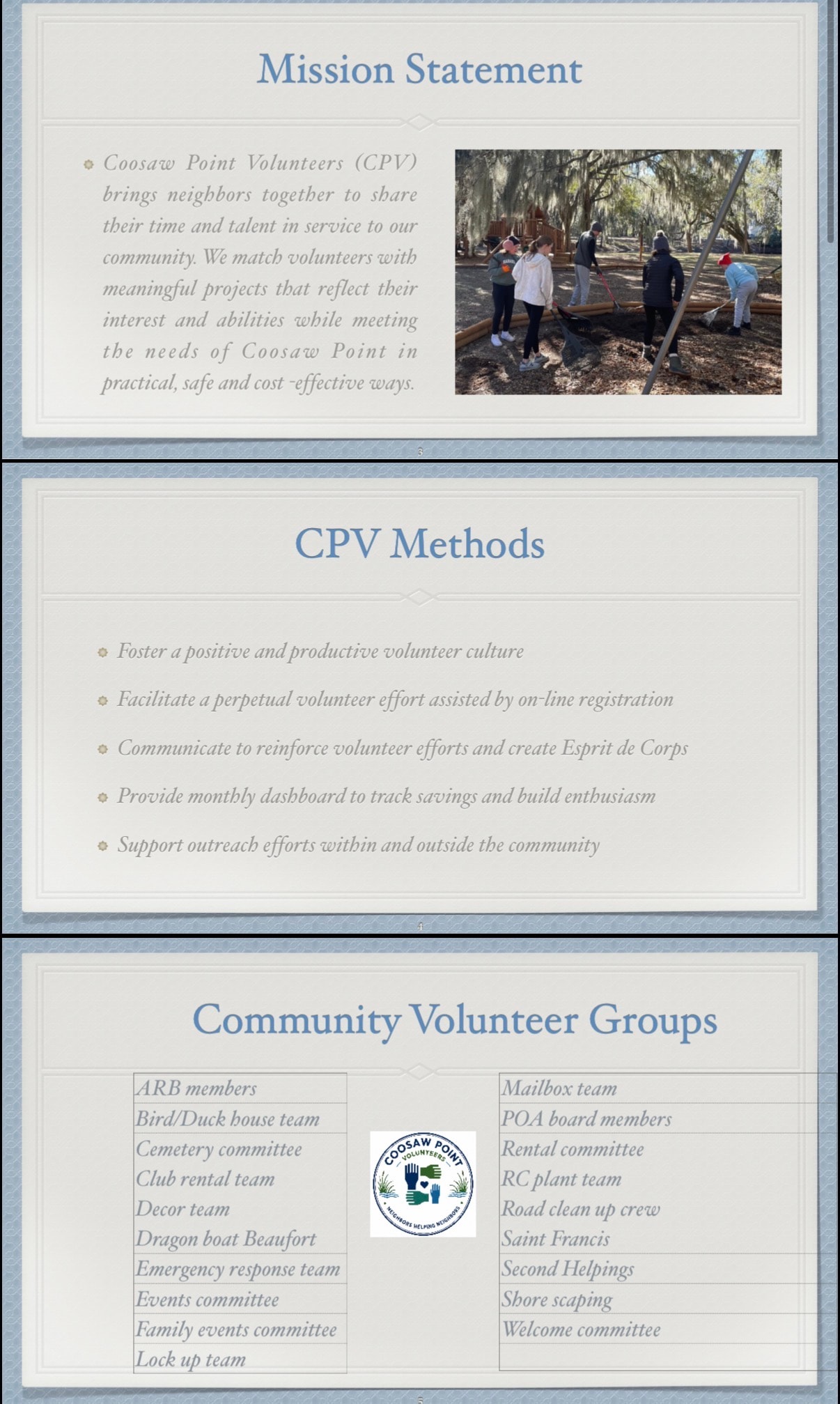
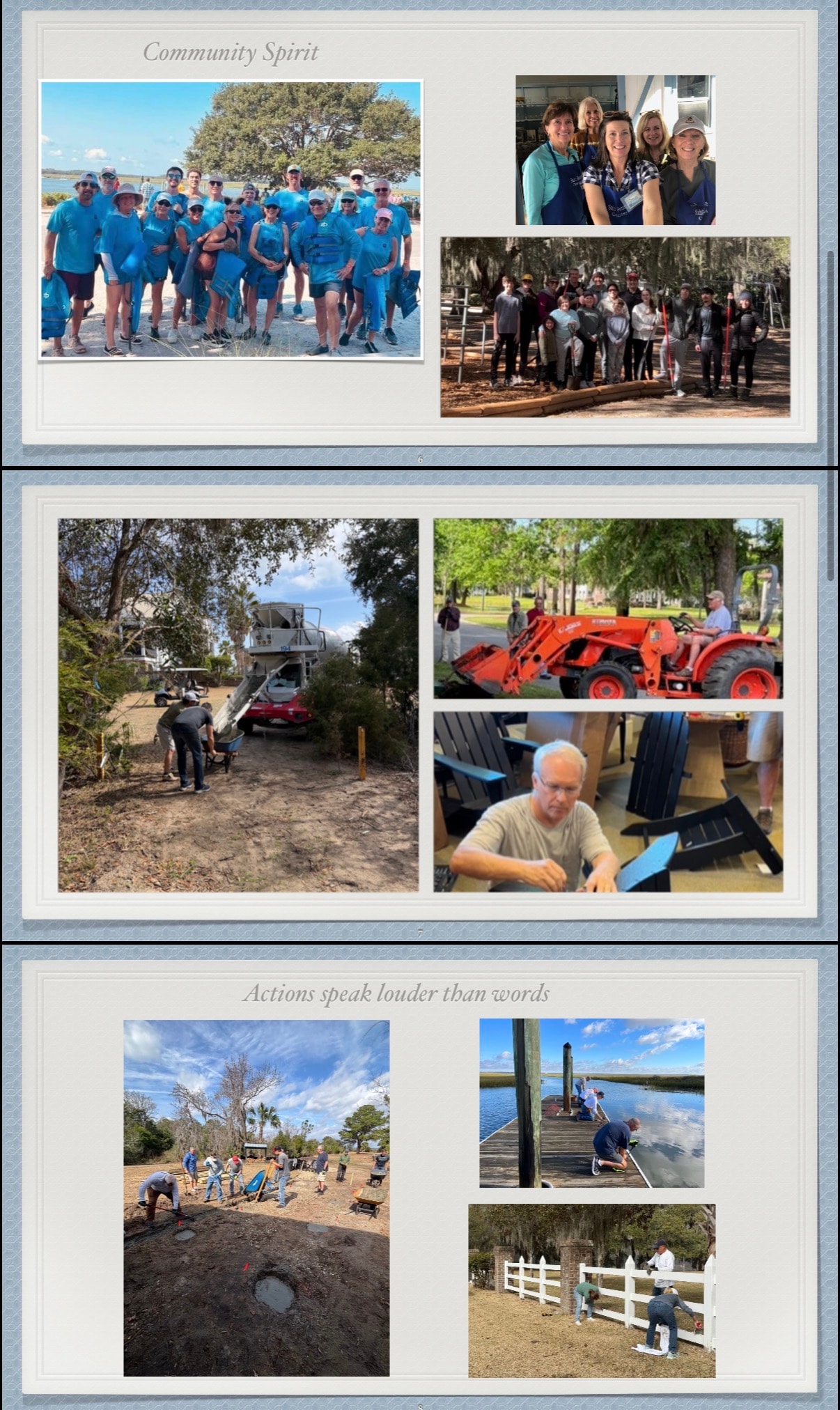
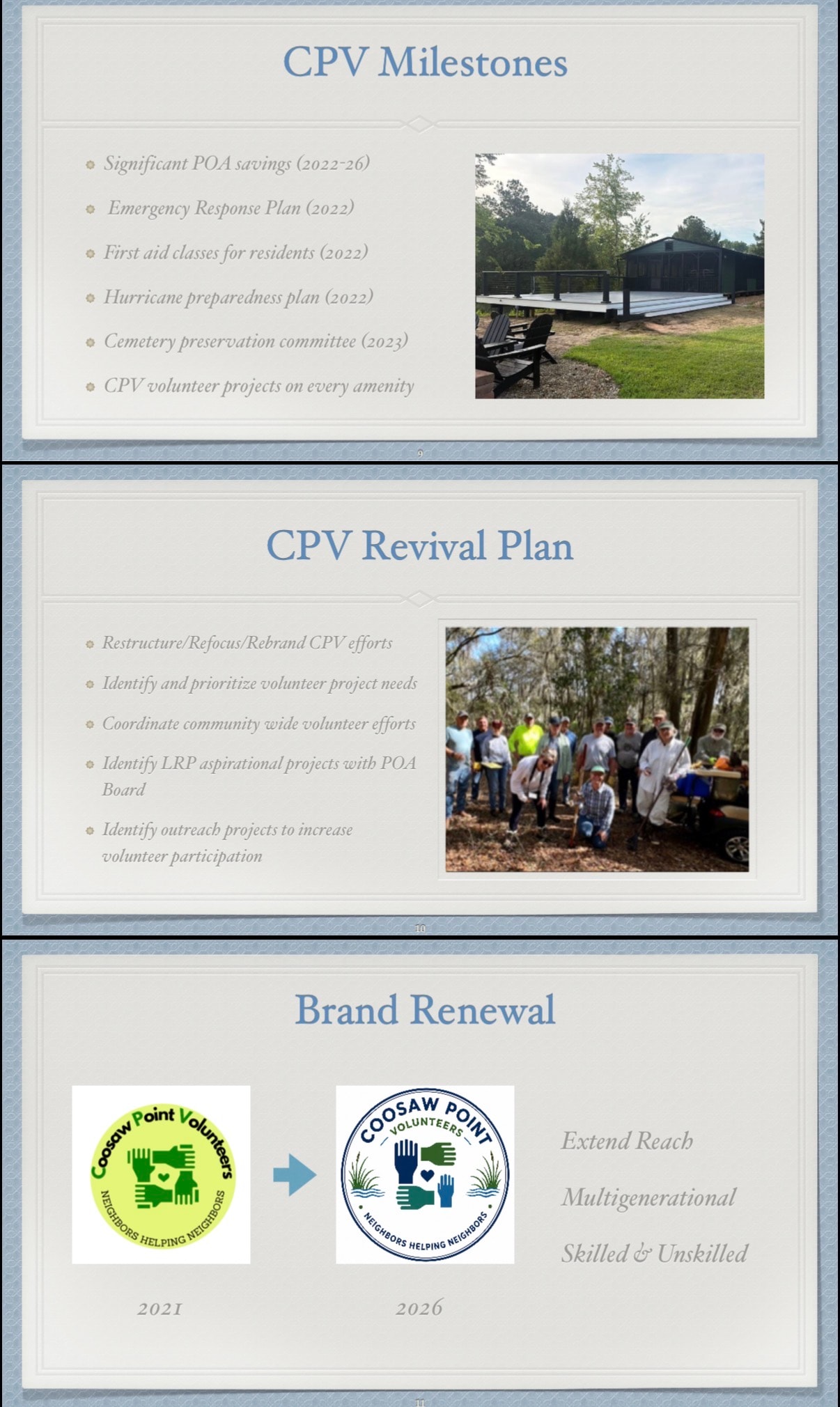
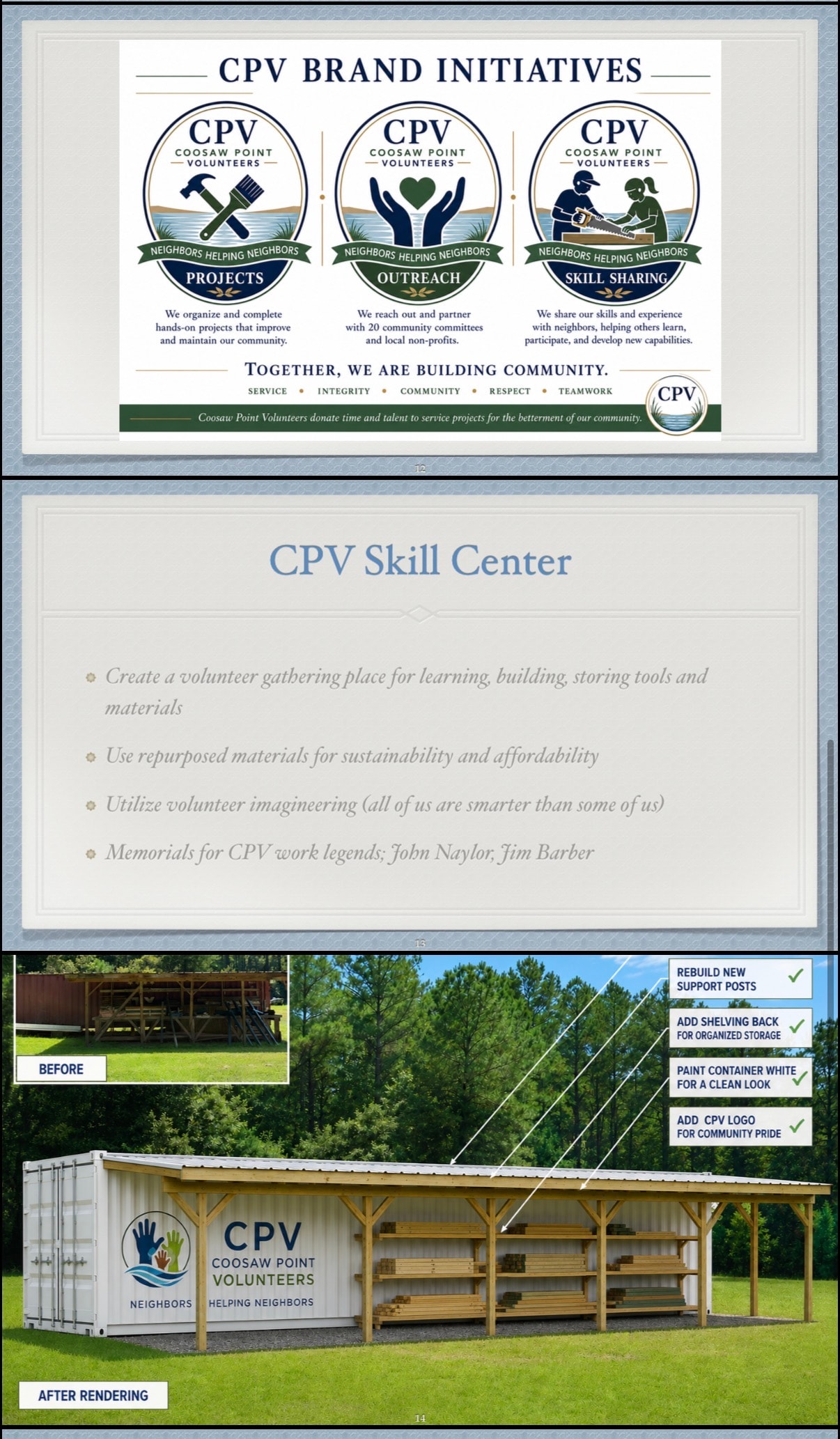
A comprehensive look at CPV's mission, methods, milestones, and vision for the future of Coosaw Point.
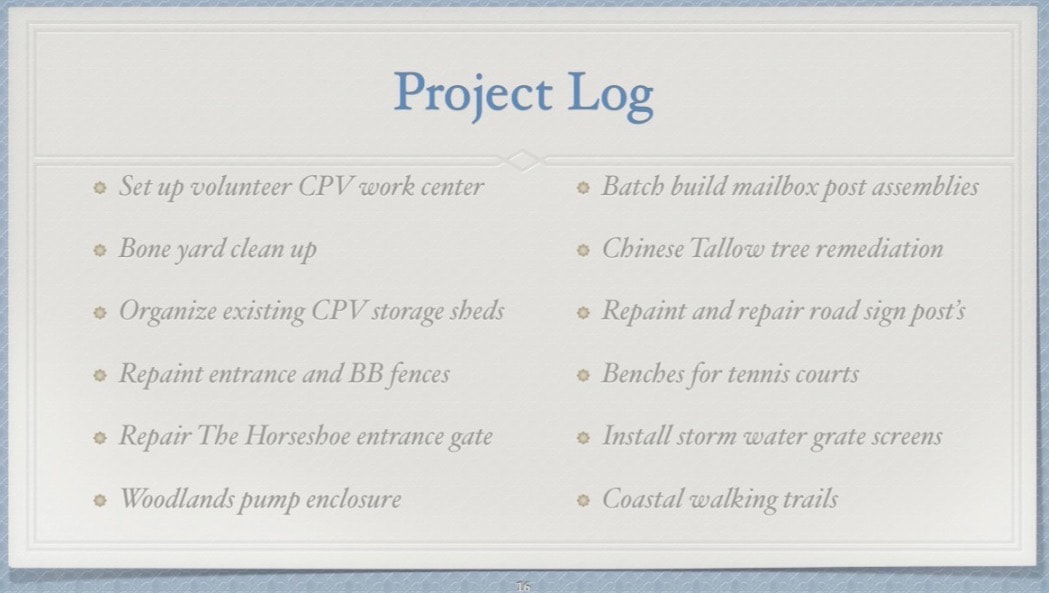
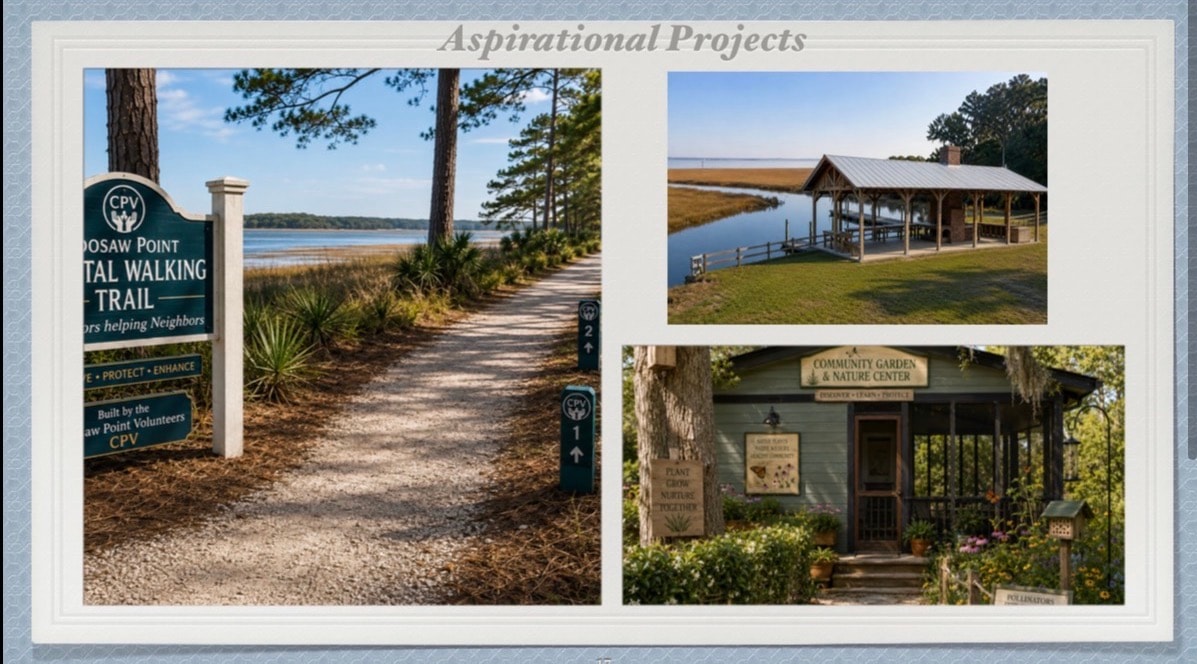
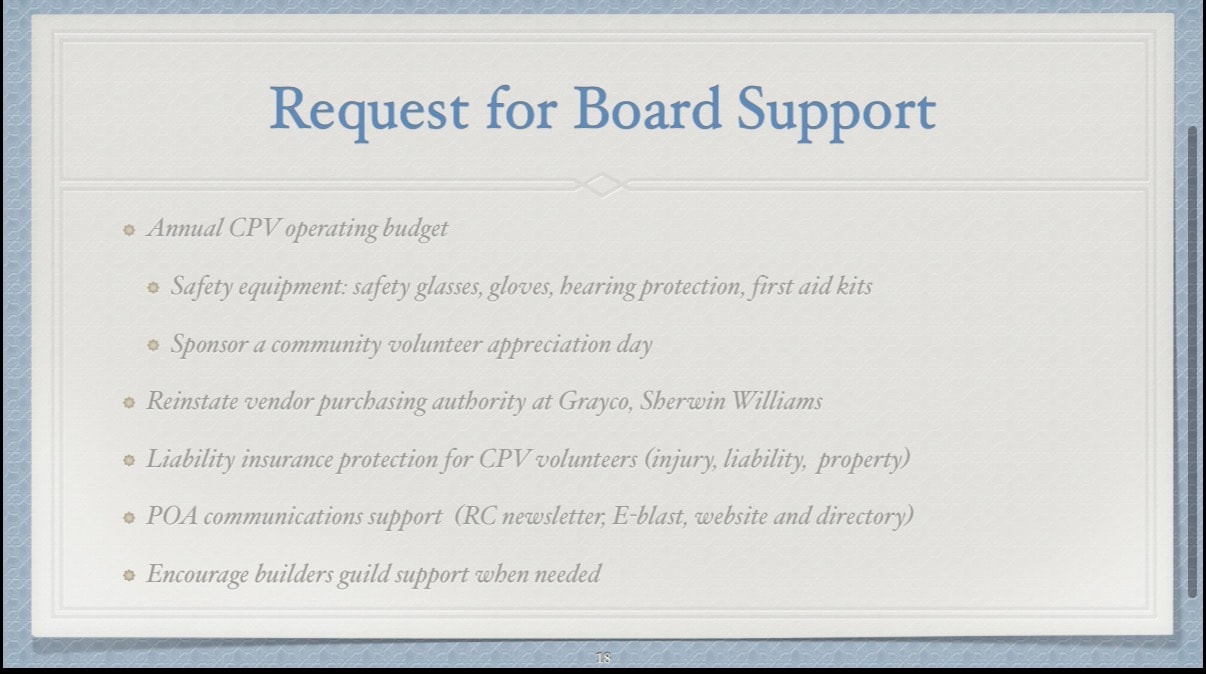
Characteristics that help volunteer organizations build trust, participation, and lasting community impact
Source: The Journal of Leadership Education
Neighbors Helping Neighbors
These attributes define how Coosaw Point Volunteers serves the community, works with stakeholders, and creates meaningful opportunities for residents to contribute.
A dependable organization with a one-team, one-mission philosophy and the drive to make things happen.
A public website offering online volunteer registration, project recommendations, project calendars, and real-time updates.
Deals fairly and openly with all stakeholders and sets an example that residents can be proud to be affiliated with.
Uses social media, daily volunteer work plans, progress reports, and weekly community updates to keep residents informed and enable CPV to be useful and responsive in our community.
Seeks projects that include as many community volunteers as possible, both directly and indirectly. Strives to remain apolitical and recognizes volunteer contributions through weekly storyboards.
Unlocks the untapped skills within the community, enabling stakeholders to find cost-effective and sustainable ways to improve Coosaw Point.
Works effectively with all Coosaw Point stakeholders, including the developer, member-owners, staff, Realtors, vendors, and the builder guild.
Research-Based Benefits for Volunteers and the Communities They Serve
Community volunteerism creates value well beyond the dollar value of donated labor. Research indicates that organized volunteering can strengthen social connections, support healthy aging, increase community participation, and give residents meaningful opportunities to contribute their skills and experience.
Stronger Community Connections
Longitudinal research has examined a two-way relationship between volunteering and social cohesion: cohesive communities can encourage volunteering, while volunteering can also help strengthen feelings of cohesion.
Benefits for Older Adults
A 2026 systematic review covering 182 papers found that studies largely reported multiple biological, psychological, social, and overall well-being benefits associated with older-adult volunteering, while also noting that stronger experimental evidence is still needed.
Social Connectedness and Support
The same review identified substantial research on social connectedness, social support, and loneliness. Many studies reported positive associations, although results were not uniform across every study.
Health and Well-Being
An umbrella review of 28 systematic reviews found reported benefits across social, mental, and physical health domains. The authors cautioned that the overall quality of the evidence varied.
Leadership Matters
Research on volunteer organizations indicates that motivating leadership is associated with stronger autonomous motivation and group-task cohesion — factors that can influence whether volunteers remain engaged.
For CPV, the value proposition is broader than completing projects or reducing POA expenses. A well-organized volunteer program can bring neighbors together around visible, constructive goals; create opportunities for residents to share skills and mentor others; strengthen relationships across the community; and encourage additional civic participation.
Community improvement → social interaction → stronger relationships → greater community attachment → continued volunteer participation
CPV can reinforce these benefits by offering meaningful projects of different sizes and skill levels, communicating openly, recognizing contributions, encouraging multigenerational participation, remaining service-oriented and apolitical, and giving volunteers real ownership in improving the community.
Lalot, F., et al. (2024). The Causal Relationship Between Volunteering and Social Cohesion: A Large Scale Analysis of Secondary Longitudinal Data. Social Indicators Research.
https://link.springer.com/article/10.1007/s11205-023-03268-6Nichol, B., et al. (2023). Exploring the Effects of Volunteering on the Social, Mental, and Physical Health and Well-being of Volunteers: An Umbrella Review. VOLUNTAS.
https://pmc.ncbi.nlm.nih.gov/articles/PMC10159229/Williams, N., et al. (2026). Health Benefits and Harms of Older Adult Volunteering: Mixed Methods Systematic Review. The Gerontologist.
https://academic.oup.com/gerontologist/article/66/5/gnag043/8614672Declerck, T., et al. Volunteers Managing Volunteers: The Role of Volunteer Board Members' Motivating and Demotivating Style in Relation to Volunteers' Motives to Stay Volunteer. VOLUNTAS.
https://doi.org/10.1007/s11266-019-00177-6Research Note: The literature generally supports meaningful benefits from volunteering, but not every study finds the same effects. CPV should present these findings as evidence of potential community and volunteer benefits rather than as guaranteed outcomes.